
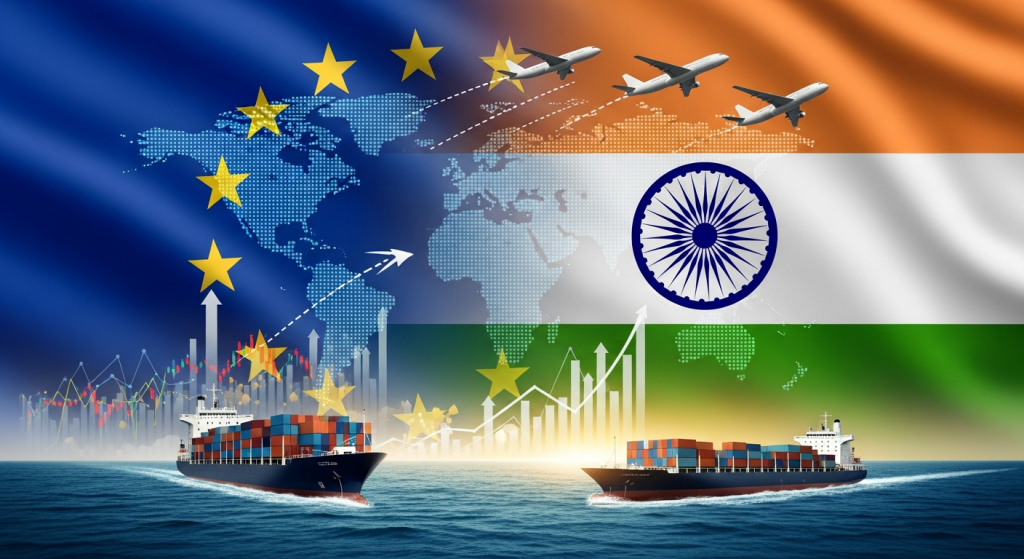
As global trade continues to evolve, many companies are paying closer attention to one of the world’s fastest-growing economic relationships: Europe and India.
Negotiations toward a comprehensive trade agreement between the European Union and India have attracted significant interest from manufacturers, technology companies, exporters, and service providers. While discussions continue, many analysts believe that deeper economic cooperation could create new opportunities for businesses operating across both regions.
Why Europe and India Matter to Each Other
India is one of the world’s largest economies and one of the fastest-growing major consumer markets. Europe, meanwhile, remains a leading center for manufacturing, technology, finance, and innovation.
Together, these two markets represent more than 1.8 billion people and a substantial share of global economic activity.
A trade agreement could help strengthen commercial ties by simplifying trade procedures, improving market access, and encouraging cross-border investment.
Key Areas That Could Benefit
Manufacturing and Industrial Trade
European manufacturers have long supplied machinery, automotive components, industrial equipment, and advanced technologies to international markets.
India’s growing industrial sector continues to invest in infrastructure, manufacturing capabilities, and production efficiency.
A trade framework could help facilitate the movement of industrial goods and improve cooperation across supply chains.
Technology and Digital Services
India has become a major global hub for software development, IT services, and digital innovation.
At the same time, Europe remains home to many leading technology firms, research institutions, and advanced manufacturing companies.
Greater collaboration could support:
- Digital transformation projects
- Cloud and software services
- Artificial intelligence research
- Cybersecurity solutions
- Technology partnerships
As businesses increasingly operate across borders, digital cooperation may become one of the most important aspects of future trade relationships.
Sustainable Industries
Both Europe and India have shown growing interest in renewable energy, sustainability initiatives, and environmental innovation.
Areas frequently discussed by industry experts include:
- Solar energy technologies
- Energy-efficient manufacturing
- Electric mobility solutions
- Sustainable infrastructure projects
Companies operating in these sectors may benefit from increased collaboration and knowledge sharing.
Supply Chain Diversification
Recent years have highlighted the importance of diversified supply chains.
Many businesses are seeking to reduce operational risks by expanding sourcing and manufacturing networks across multiple regions.
A stronger Europe–India trade relationship could provide additional flexibility for companies looking to access new suppliers, manufacturing partners, and consumer markets.
This trend is particularly relevant for industries such as:
- Electronics
- Pharmaceuticals
- Consumer goods
- Industrial manufacturing
- Information technology
Opportunities for Small and Medium-Sized Businesses
While large multinational corporations often receive the most attention, smaller businesses could also benefit from improved trade conditions.
Potential advantages may include:
- Easier access to international customers
- Reduced administrative complexity
- Expanded partnership opportunities
- Improved market visibility
For many SMEs, international expansion becomes more achievable when trade processes are simplified and business regulations become more transparent.
What Consumers Could Notice
Trade agreements often affect more than just corporations.
Consumers may eventually benefit from:
- Greater product availability
- Increased competition
- Broader access to international brands
- Expanded digital services
The extent of these effects depends on the final structure of any agreement and how businesses adapt to new opportunities.
Looking Ahead
The Europe–India trade relationship continues to attract attention from business leaders, economists, and industry analysts.
Although negotiations can take time, many organizations are already exploring how stronger economic cooperation could influence manufacturing, technology development, digital services, and global supply chains.
For companies seeking long-term growth, understanding emerging trade relationships may become an increasingly important part of strategic planning.
Conclusion
A future Europe–India trade agreement could influence multiple sectors, including manufacturing, technology, sustainability, and digital services. While the final details remain subject to negotiation, businesses across both regions are closely monitoring developments and evaluating how deeper economic cooperation may shape future opportunities.
Disclaimer: This article is provided for informational and educational purposes only. It does not constitute financial, legal, business, or investment advice. Readers should conduct their own research and consult qualified professionals before making business or financial decisions.